We are here to help you optimize digital transformation

MII is ready to help businesses become agile and resilient through the power of technology

Secure, managed public cloud services with a network-centric design and multiple layers of security
Our goal is to make sure every project that you trust us—no matter how complex— leads to a successful, satisfactory outcome

MII develop proven methodologies, deliver holistic perspective, capture across framework boundaries
Investment in the right technology help block the most persistent cyber threats
MII manage data and turn it into meaningful and relevant business insights
Providing the platforms that your business needs to succeed

Optimize and secure hybrid IT across your network infrastructure

MII help you drive and manage your innovation through our enterprise-grade consulting, technical & support

IT training with international standards in collaboration with leading technology service providers worldwide

MII provides solutions to customers from the stages of design and POC, consulting, implementation, support, maintenance, services, and training
See More




Discover use cases of technology implementation across various industries
View all Use case




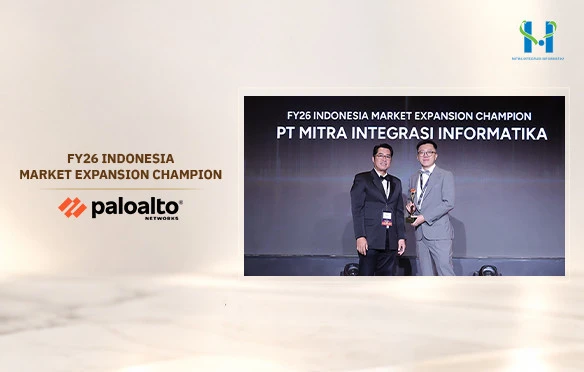
Atas kontribusinya dalam menghadirkan pelanggan baru (new logo) terbanyak bagi Palo Alto Networks, khususnya di industri Financial Services (FSI), Manufacture, dan Retail, PT Mitra Integrasi Informatika (MII) mendapat penghargaan FY26 Indonesia Market Expansion Champion.Penghargaan ini diberikan dalam acara FY27 Partner Kick-Off bertema “Secure the Frontier” pada 8 Oktober 2026 di Jakarta, dan diterima langsung oleh Gunarto Kusnadi, Division Manager MII dari Senggono Pramono, Enterprise and Commercial District Sales Manager, Palo Alto Networks.Apresiasi ini menjadi bukti keberhasilan kolaborasi MII dan Palo Alto Networks dalam memperluas adopsi solusi Cybersecurity serta menjangkau lebih banyak pelanggan di berbagai sektor industri.
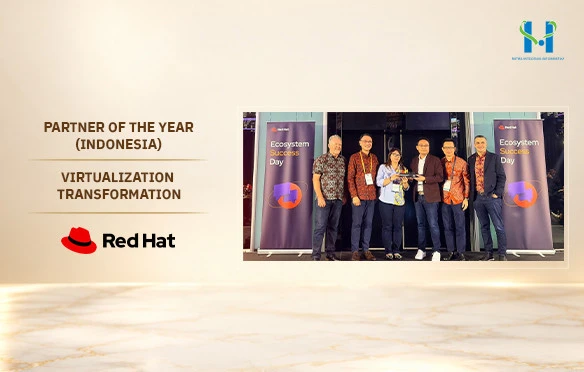
a { text-decoration: none; color: #464feb; } tr th, tr td { border: 1px solid #e6e6e6; } tr th { background-color: #f5f5f5; }PT Mitra Integrasi Informatika (MII) has been recognized with two awards at the Red Hat Ecosystem Success Day 2026: Partner of the Year – Indonesia and Virtualization Transformation. These awards reflect MII’s continued business growth with Red Hat and its commitment to delivering impactful digital transformation initiatives for enterprise customers across Indonesia.The Partner of the Year – Indonesia award recognizes MII’s achievement as the first partner in ASEAN to exceed its Annual Contract Value (ACV) target, while also highlighting the trust placed in the company by leading organizations in the banking and financial services sector.Meanwhile, the Virtualization Transformation award acknowledges MII’s capability in helping enterprises modernize traditional virtual machine environments and transition to more scalable, flexible, and resilient Red Hat platforms.The awards were received by Hariyo Nusantoro, Director of PT Mitra Integrasi Informatika, and Nessya Violeta Hartono, Product Marketing Manager of PT Mitra Integrasi Informatika.For MII, these achievements reflect strong customer trust, a successful collaboration with Red Hat, and the company’s commitment to delivering innovative solutions that support enterprise digital transformation.
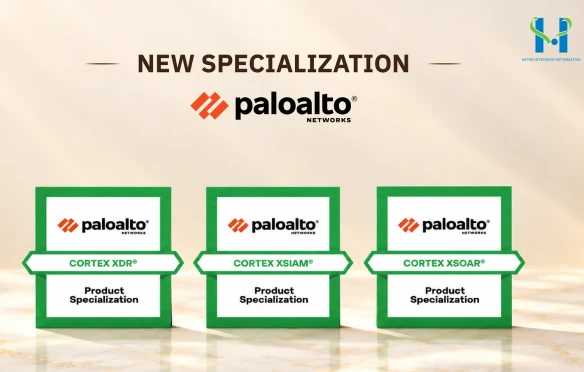
Sebagai Diamond Partner Palo Alto Networks di Indonesia, MII kembali memperkuat kapabilitas cybersecurity dengan meraih 3 Product Specialization baru: Cortex XDR, Cortex XSOAR, dan Cortex XSIAM.Ketiga specialization ini memperluas kapabilitas MII dalam security operations, mulai dari threat detection, investigation, hingga security automation dan response dengan dukungan AI.Melengkapi Hardware Firewall, Software Firewall, dan Prisma SASE, MII kini memiliki total 6 Product Specialization Palo Alto Networks.Dengan kapabilitas yang semakin lengkap, MII siap membantu organisasi membangun keamanan yang lebih proaktif, terintegrasi, dan scalable agar dapat mendeteksi ancaman, bahkan meresponsnya secara lebih cepat, otomatis, dan mendukung penerapan Zero Trust.Cari tau informasi lebih lanjut tentang Palo Alto Networks:customer.experience@mii.co.id

Mitra Integrasi Informatika (MII) and VIDA have collaborated to help businesses in Indonesia manage documents more easily. Through MII, companies can now utilize the VIDA Sign Platform (VSP), a solution that integrates digital signature and e-Stamp (e-Meterai) capabilities into a single platform, ensuring both security and legal validity.Why have digital signatures become essential for many businesses?In recent years, the way businesses handle documents has changed significantly. As business processes become faster and more flexible, companies are compelled to adapt their document management methods to be more practical and efficient.Consequently, businesses across various industries are shifting toward digital processes and reducing manual steps. This is where electronic signatures play a vital role, helping companies accelerate approval processes, finalize documents more efficiently, and conduct business without being hindered by convoluted workflows.A Single Platform for Digital Signatures and e-StampsThe VIDA Sign Platform (VSP) combines digital signatures and official Peruri e-Stamps into one platform. This eliminates the need for companies to switch between different platforms to complete their documentation. Everything is handled digitally, anytime and anywhere, while maintaining document security.Regarding legal validity, VIDA is an Electronic Certification Provider (PSrE) certified by the Kementrian Komunikasi dan Digital (Komdigi). This ensures that digital signatures generated via VSP are legally binding under the ITE Law, allowing business documents to be signed securely and reliably.Beyond offering convenience and legal validity, VSP provides cost savings of up to 53% compared to other digital signature platforms. With an onboarding process taking just 4 to 6 working days, companies can start using the platform quickly.Ready to make your business document processes easier and more efficient? Consult with the MII team about your needs.For further information, visit: VIDA Sign Platform Access

Growing business demands and increasing infrastructure complexity have prompted many organizations to re-evaluate their virtualization strategies. A major challenge in this shift is migrating workloads away from VMware environments without introducing additional operational complexity or risk.The NetApp Shift Toolkit addresses this challenge.As part of the NetApp ONTAP ecosystem, the NetApp Shift Toolkit automates the conversion and migration of virtual machines between hypervisor environments. This structured approach allows organizations to leverage NetApp storage and data infrastructure as a key component of their virtualization modernization journey.In migration scenarios involving Nutanix, the NetApp Shift Toolkit facilitates workload transfer by minimizing the need for complex manual processes. This enables IT teams to focus on workloads and applications rather than time-consuming migration tasks.However, modernization is about more than just switching hypervisors.With NetApp ONTAP, organizations retain enterprise-grade data management, storage efficiency, data protection, and security capabilities, along with the flexibility to support diverse workloads in modern environments. NetApp ONTAP delivers data recovery speeds 100% faster than NDMP, supports six functions aligned with the NIST framework, and achieves 99% accuracy in ransomware threat detection.The NetApp Shift Toolkit paves the way for modernization, while NetApp ONTAP remains the foundation of the data infrastructure.After all, virtualization modernization is about more than just leaving VMware; it is about building a data infrastructure that is flexible, efficient, and ready for future IT demands. In under five minutes, NetApp ONTAP delivers space-efficient database backups and replication—offering a solution that is simple, easy, and secure.Modernize your workloads. Protect your data. Build your future with NetApp.Interested in building a modern virtualization environment with the flexibility of NetApp data infrastructure?Contact us now: Kevin KurniawanKevin.kurniawan@mii.co.id

Nowadays, developer workflows have accelerated significantly with the advent of AI-assisted coding. Tasks that once took days can now be completed in a span of a few hours. However, the efficiency AI brings to coding introduces new challenges that often overwhelm engineering teams: code quality and security.The speed offered by AI does not always equate to high-quality or secure code. AI-generated code frequently contains hidden vulnerabilities, bugs, and spaghetti code that is difficult to manage. Complicating matters, if these issues are only discovered near a release deadline or during an audit, the remediation process is costly and time-consuming, not to mention the stress it places on the entire team.This is where SonarQube bridges the gap between efficiency and security in AI-generated code. SonarQube helps engineering teams align their work pace with compliance standards. Far more than a standard scanner, SonarQube addresses key challenges in software development:Early Security Prevention (Shift-Left Security): Identifies bugs, security vulnerabilities, and maintainability issues in real-time directly within the developer's IDE as the code is being written.AI Code Assurance: Ensures that AI-generated code meets quality standards, remains clean, and is free of security vulnerabilities before reaching production.Hassle-Free Audits (Automated Compliance): Automates compliance checks against industry standards (such as OWASP Top 10, PCI DSS, and GDPR) and automatically generates audit trails, eliminating the need for manual record-keeping.Preventing Problematic Code Merges (Quality Gates): Acts as an automated "gatekeeper" within the CI/CD pipeline, halting code that fails to meet standards before it enters the main repository. With the solutions offered by SonarQube, security is no longer a burden at the end of a project; instead, it becomes an automated, guaranteed part of the developers' daily workflow.As an Official Sonar Partner in Indonesia, PT Mitra Integrasi Informatika (MII) is ready to help build a development ecosystem that is fast, secure, and compliant with standards. Want to know how SonarQube can be tailored to your engineering team's needs? Let’s have a chat with MII’s team of experts!Contact us for further information:customer.experience@mii.co.id