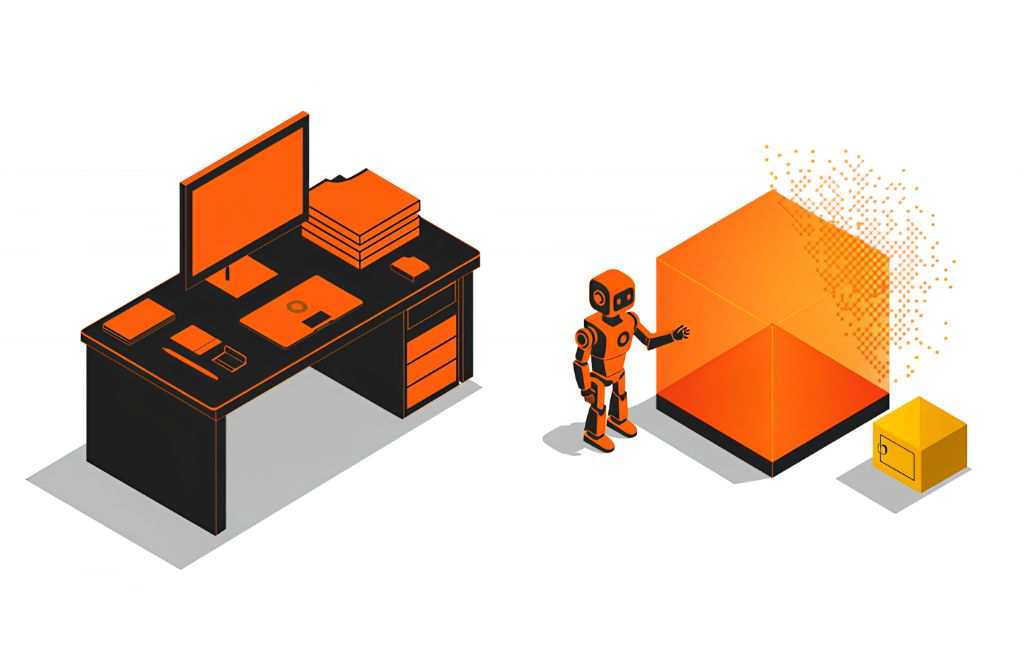
A chatbot answers. An agent acts.
Ask a chatbot a question and it returns text. Give an AI agent a task like "analyze this spreadsheet and chart the outliers," "fix the failing test in this repo," or "open this site and pull the three cheapest listings," and it must take action. It runs code, drives a browser, writes files, reads the results, decides what to do next, and repeats the process until the task is complete.
That difference creates a requirement chatbots never had: a workspace. Agents need somewhere to execute code, store temporary files, access a browser, and perform the work itself.
The obvious answer might be to give agents the same kind of environment developers use—a persistent laptop or VM. In practice, that's exactly the wrong model. Understanding why explains what Alibaba Cloud AgentRun is designed to provide.
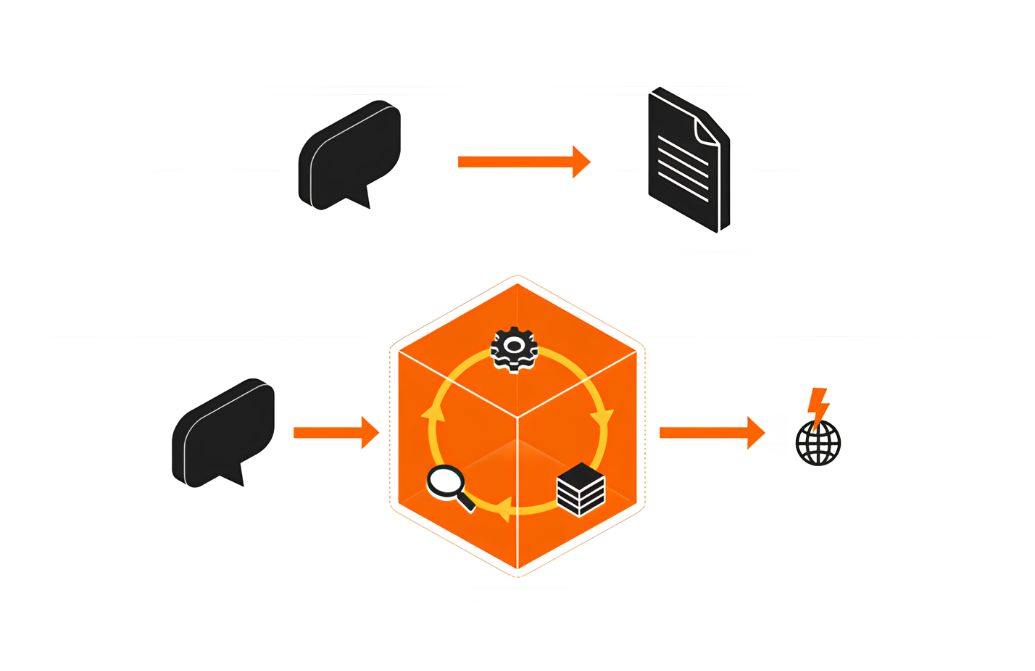
Think about your own development environment. You install tools once, leave files where they are, and return later to find everything unchanged. For humans, persistence is the default, while isolation is only used when working with untrusted software.
Agents need the opposite: isolation by default, persistence by exception. Every task should begin in a fresh, sealed workspace, while anything that must survive—such as memory, identity, permissions, artifacts, or audit logs—is stored outside that workspace.
This separation is the key architectural shift. The execution environment remains disposable, while everything valuable is deliberately kept durable elsewhere.
Seen at the level of the execution workspace, the contrast between humans and agents becomes clear:
| A human's dev environment | An agent'sexecution workspace |
Lifespan | Months. You return to it. | One task,seconds to minutes, then gone. |
What persists in it | Everything, by default. | Nothing, by default. Durable state lives outside it. |
Identity | The machine is yours. | The workspace is anonymous; identity and permissions are attached per task, from outside. |
Provisioning | Set up once, cost amortized. | Materialize on demand, vanish when done. |
Concurrency | One human, one machine. | Thousands firingat once, then none. |
Trust | You trust yourself. | Untrusted by construction. It runs code it wrote, on inputs (web pages,documents) that can hide instructions. |
This is the gap AgentRun is designed to fill. Instead of provisioning and maintaining servers for agent execution, AgentRun creates a fresh, isolated workspace whenever a task starts, destroys it when the work is finished, and charges only for the time the workspace is actually running.
The rest of this article explores why that model is a better fit for AI agents than long-lived infrastructure.
At first glance, disposable may sound like a compromise. For AI agents, it's actually an advantage. Each benefit maps directly to the way AgentRun manages execution environments.
Every task begins from the same known-good baseline. No leftover files, dependency drift, or hidden state from previous runs can affect the outcome. AgentRun provisions a fresh sandbox for every task and removes it once it's no longer needed, making execution far more consistent and reproducible.
Agents execute code they generate themselves while interacting with untrusted inputs such as websites and documents. If something goes wrong—whether a faulty command, malicious content, or a filled disk—the impact is confined to that isolated workspace, which is automatically destroyed after use. AgentRun further limits risk by isolating each sandbox and enforcing a maximum lifetime.
Persistent workspaces can accidentally carry over credentials, cached data, or temporary files from one task to another. By creating a new sandbox for every execution, AgentRun eliminates this entire class of risk by design.
Unlike human development environments, agents spend much of their time waiting—for model responses, browser events, or external services. Keeping dedicated machines running would waste resources. Built on Alibaba Cloud Function Compute, AgentRun creates workspaces only when needed, so costs scale with actual execution instead of idle time.
Agent workloads are highly variable. Thousands of tasks may start simultaneously and finish minutes later. Because workspaces are created on demand and removed automatically, AgentRun scales with demand without requiring capacity planning, server maintenance, or idle infrastructure.
Together, these characteristics align with the agent threat model. AI agents routinely execute code and interact with untrusted content, making isolation and disposability fundamental design choices rather than optional optimizations.
The workspace reveals how AI agents actually operate.
An agent isn't an oracle that simply knows the answer. It works through a loop: planning, taking action, observing the result, and trying again until the task succeeds. That process inevitably creates temporary files, failed attempts, and discarded outputs, which is exactly why execution belongs inside a disposable workspace.
Anything worth keeping—such as memory, generated artifacts, or execution history—belongs outside that workspace. The execution environment is temporary; what the agent learns and produces is not.
Picture an AI agent as a tireless intern given a sealed room, a computer, and one assignment. After the task is complete, the room is cleared and rebuilt for the next job, while the notes it produced are safely archived. That's more than a metaphor—it's a close approximation of the architecture.
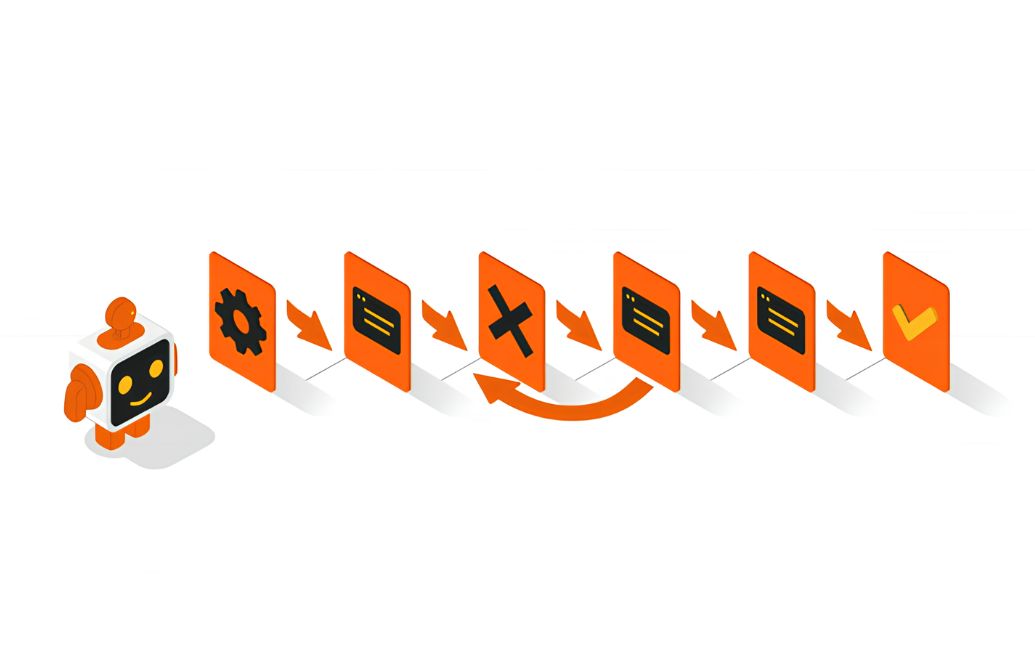
Consider a sales operations agent asked to "pull last week's pipeline report and flag stalled deals."
A fresh workspace is created. The agent opens a browser, signs in to the CRM, downloads the report, runs a short Python script to identify opportunities untouched for 14 days, writes a summary, and exits. Once the task is complete, the workspace is destroyed.
Just as important is what doesn't persist:
Meanwhile, the outputs that matter—the report, audit trail, and memory that "Acme has gone quiet"—are stored outside the workspace, allowing execution to disappear while preserving everything of lasting value.
That single workflow captures the architectural shift: execution is disposable, while memory, artifacts, and governance remain durable.
This is exactly what AgentRun delivers. Rather than asking you to provision and manage infrastructure for AI agents, AgentRun provides the execution environment as a managed service while keeping each architectural layer clearly separated.
Getting started is simple: define your agent's model, prompt, and tools, and AgentRun handles the underlying execution environment.
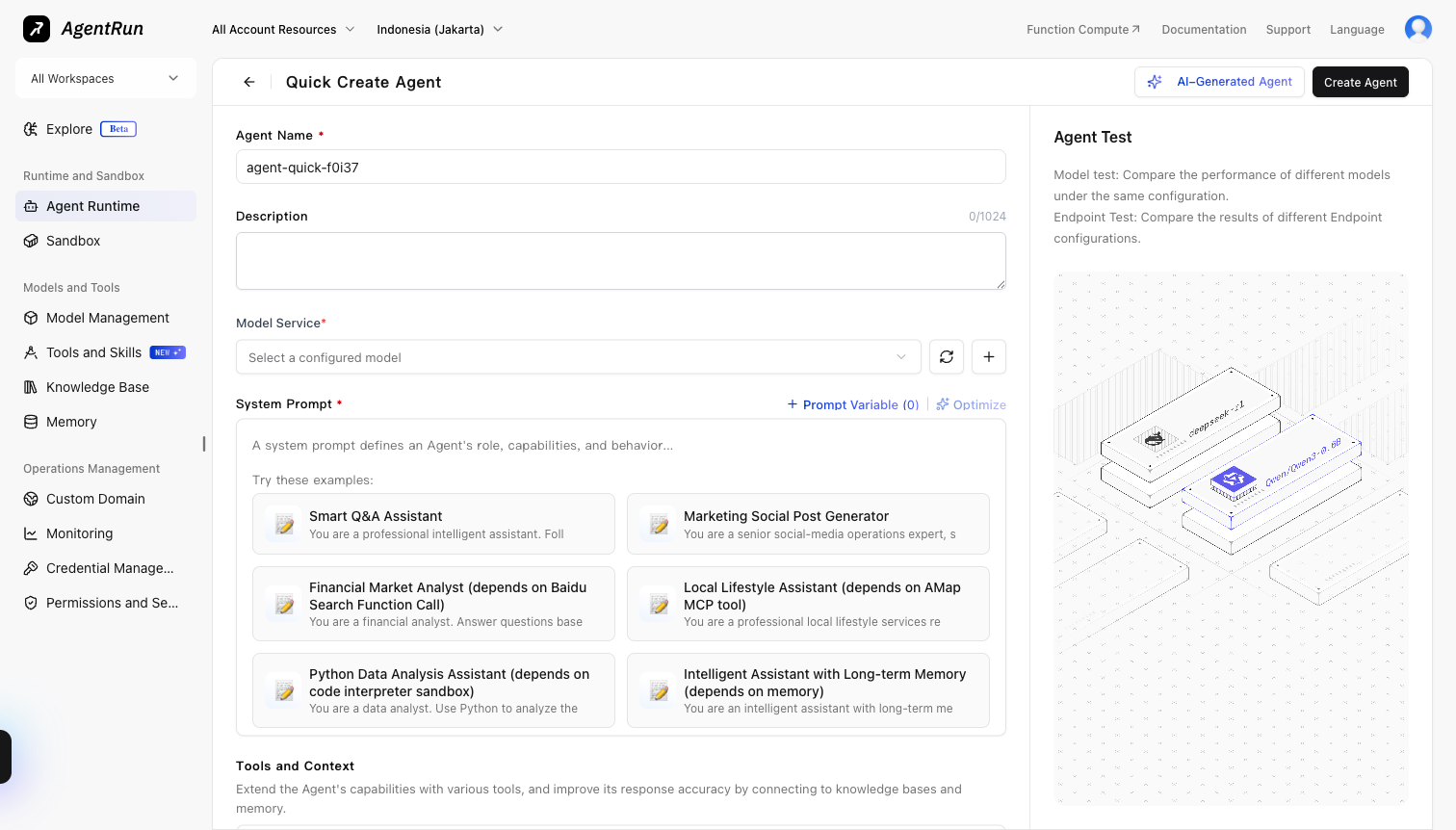
At the center is the AIO Sandbox—the disposable workspace where agents perform their tasks.
It combines the three capabilities an agent needs into a single isolated environment:
Alibaba Cloud aptly describes these as an agent's eyes, brain, and hands.
Creating an AIO Sandbox: choose your resources, browser, and runtime. The workspace is created on demand and automatically removed when the task is complete.
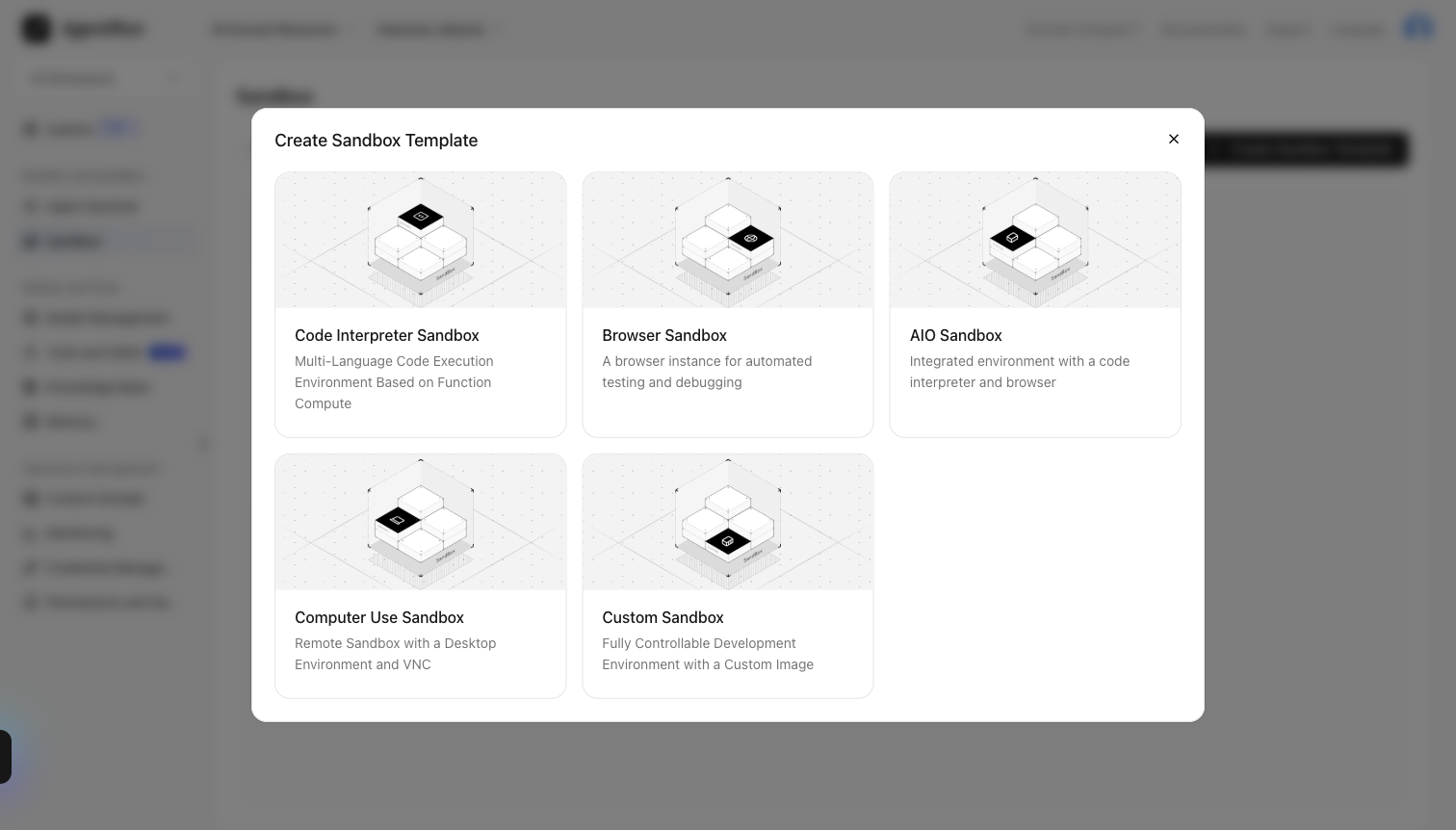
For browser automation, AgentRun provides a dedicated Browser Sandbox.
It supports standard tools such as Playwright and Puppeteer through the Chrome DevTools Protocol, while a built-in VNC live view lets you watch the agent navigate websites in real time. This visibility makes debugging significantly easier by showing exactly what the agent is doing instead of treating browser automation as a black box.
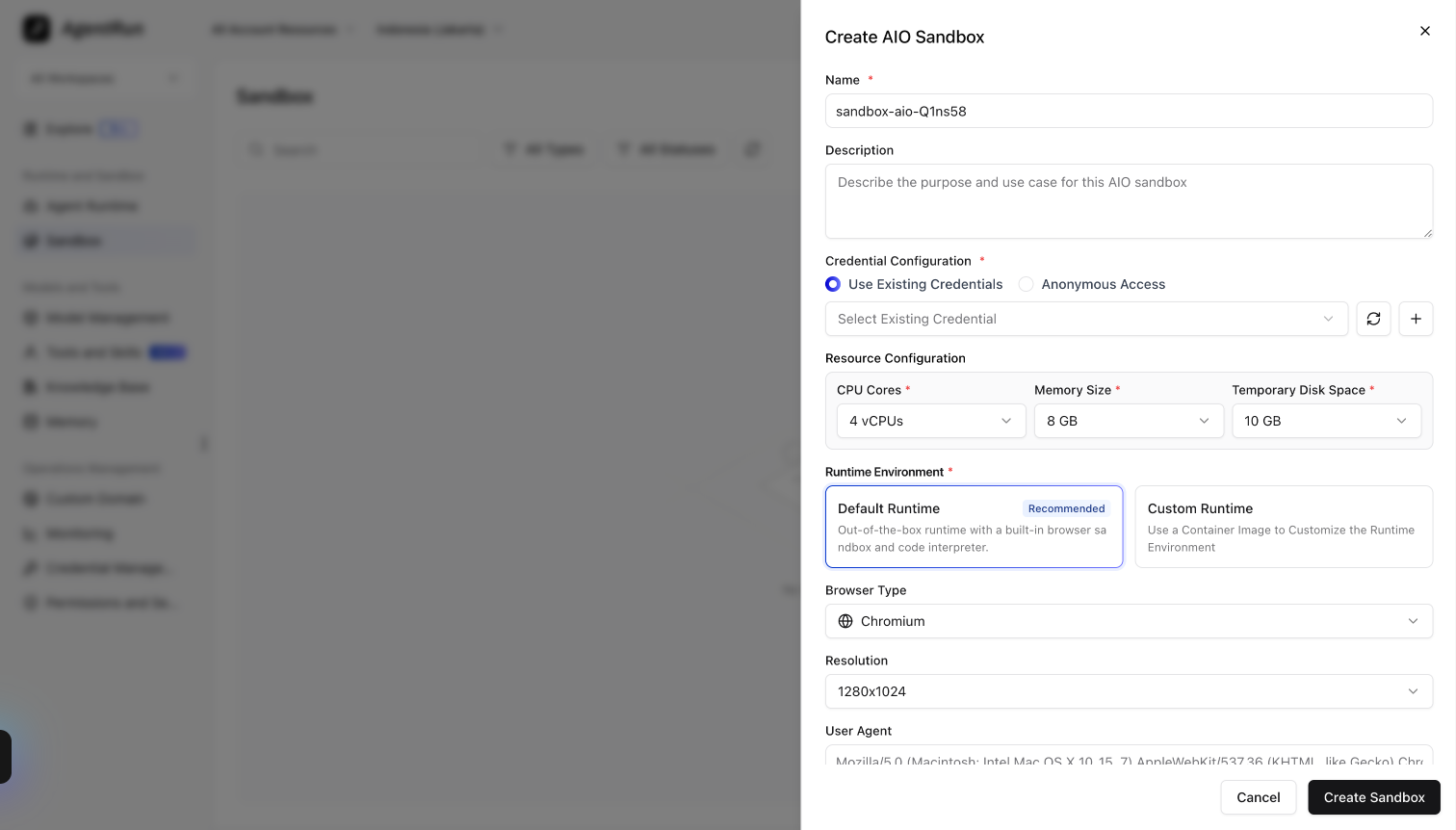
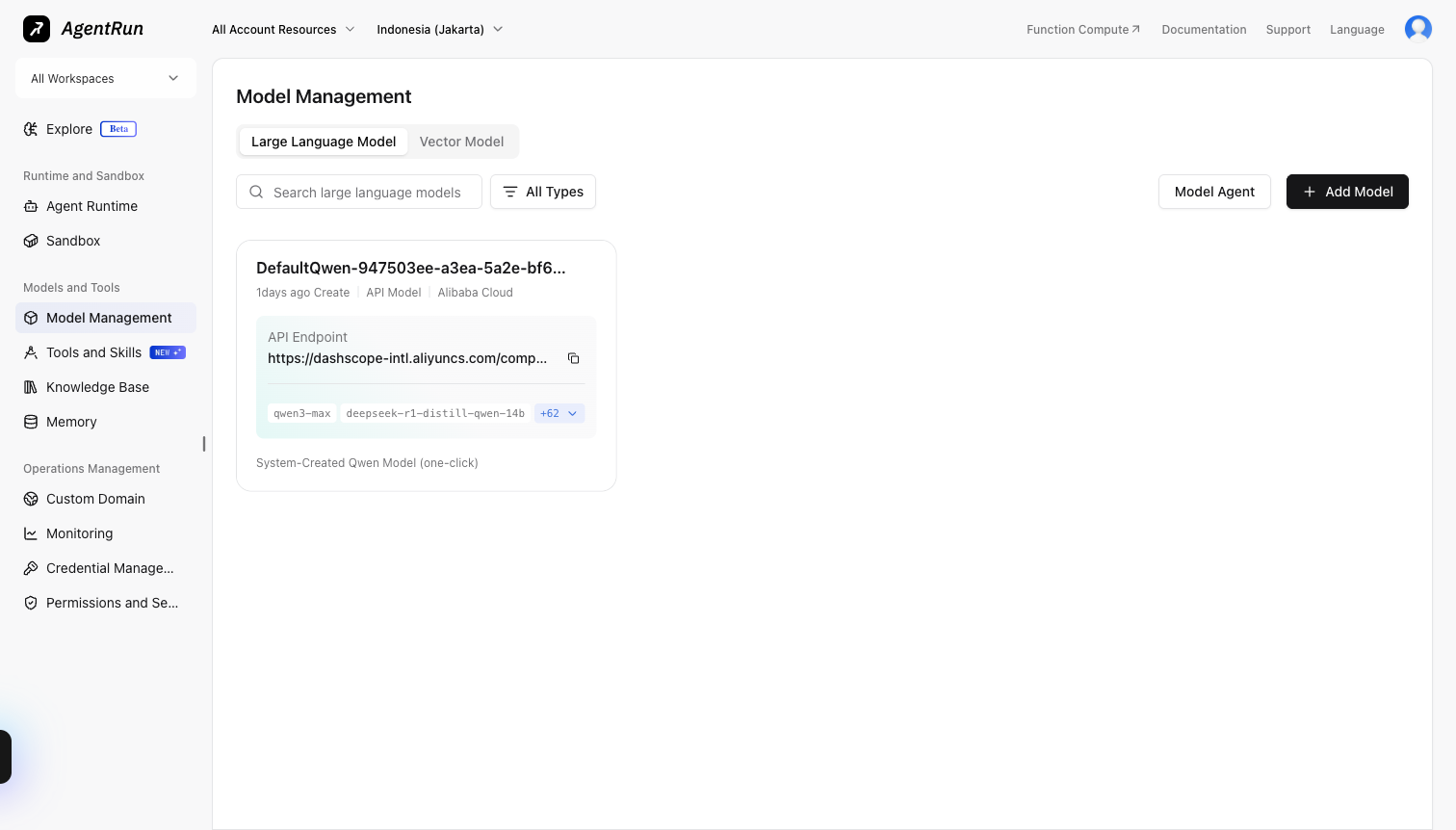
AgentRun also provides centralized control over model access.
Administrators can define which models agents are allowed to use, apply usage limits, and enforce governance policies across deployments.
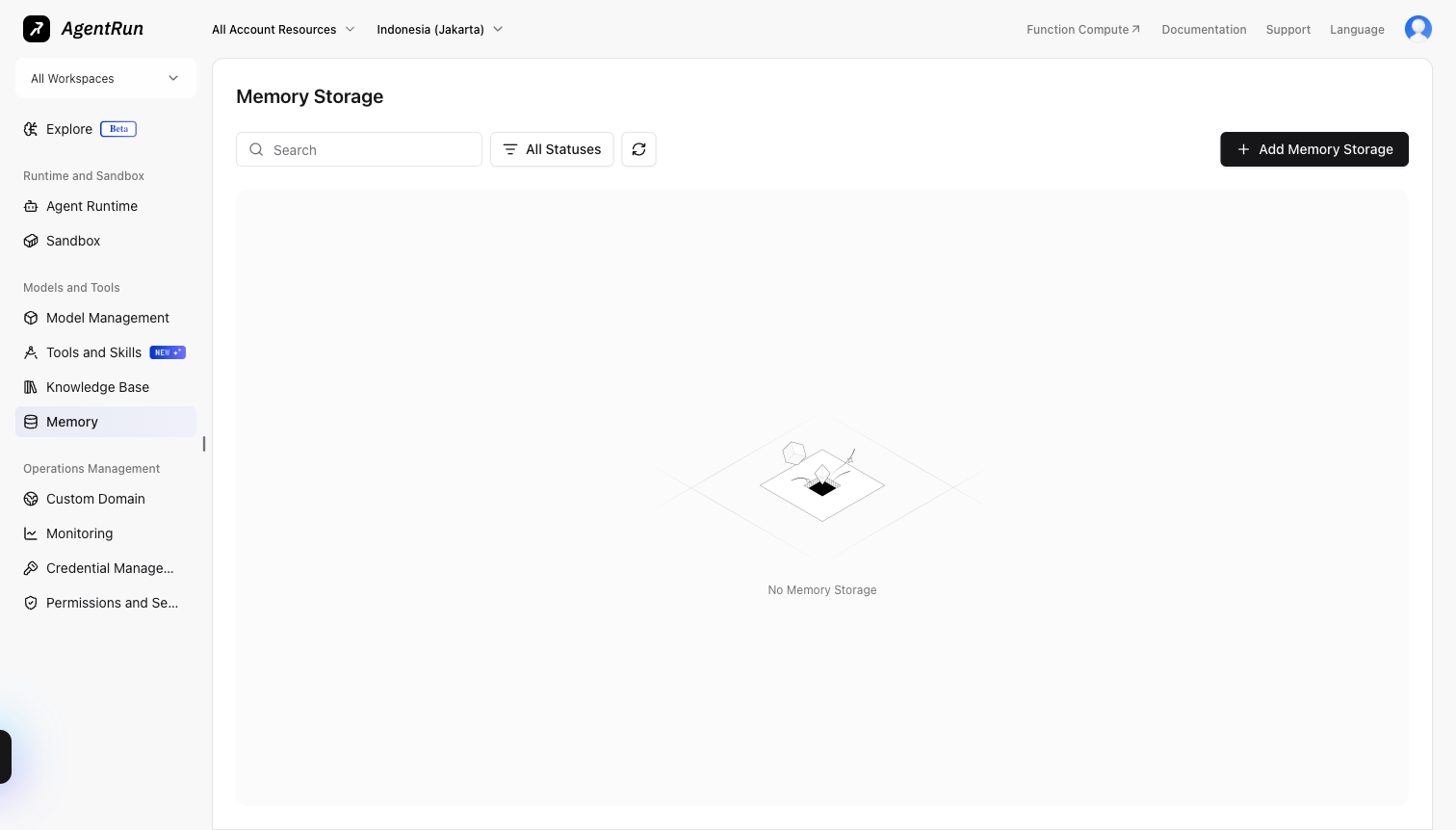
The agent's long-term memory is deliberately separated from its execution environment.
Because memory, state, and generated artifacts are stored outside the workspace, every execution can start from a clean environment without sacrificing continuity between tasks.
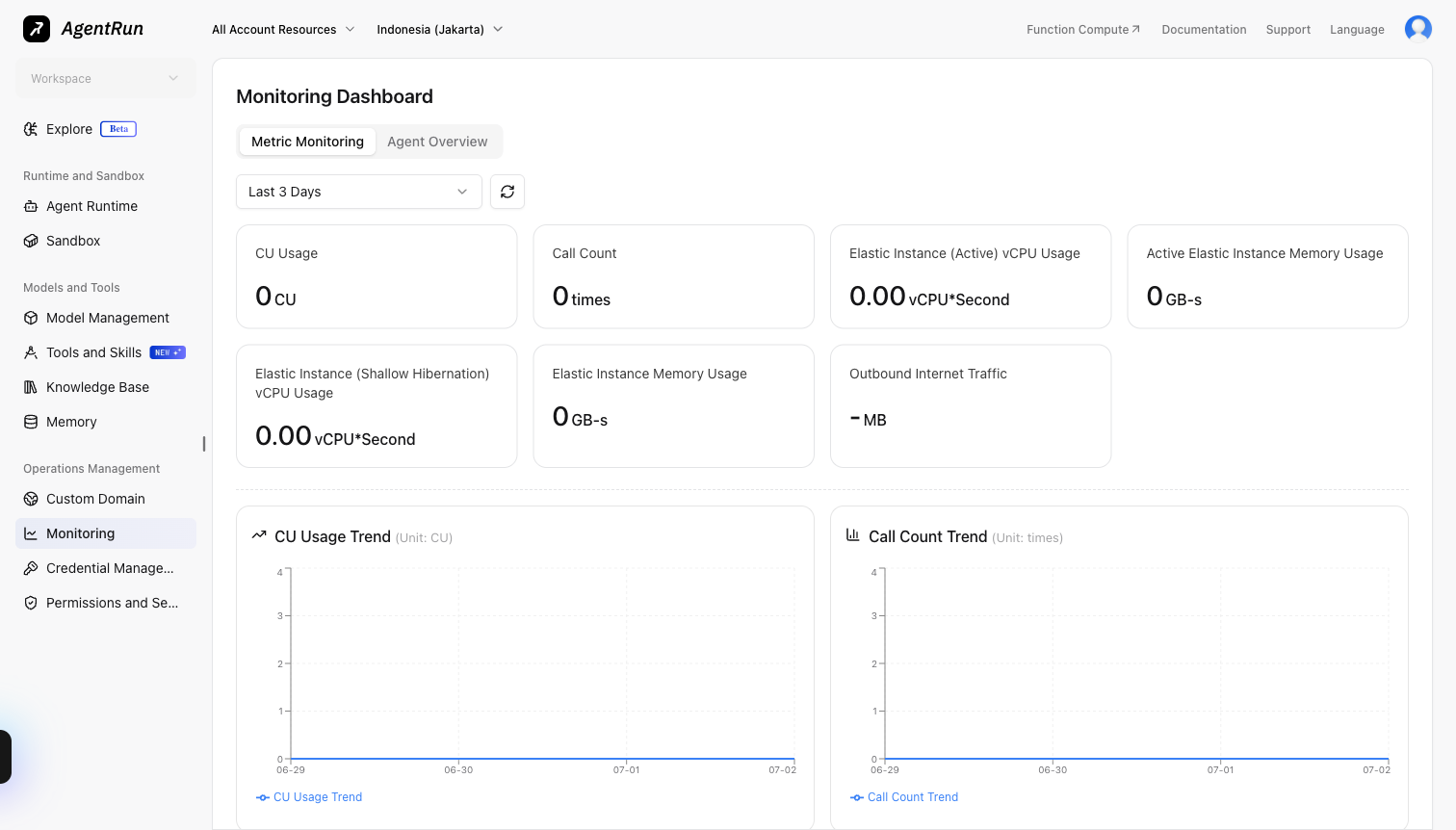
Every execution is tracked through an observability layer that records agent activity, execution traces, and resource usage.
Together, these components allow AgentRun to separate disposable execution from durable state while presenting everything through a single managed platform.
A natural question follows: if AI agents execute untrusted code on shared cloud infrastructure, how is that kept secure?
The answer isn't that sandboxing makes the problem disappear. Instead, AgentRun applies defense in depth.
Each workspace runs inside a strongly isolated execution environment based on the same lightweight VM-class isolation used to secure large-scale multi-tenant serverless workloads. While no isolation technology is perfect, this provides a mature and battle-tested security boundary.
At the same time, AI agents introduce a different class of risk that sandboxing alone cannot solve: prompt injection. Instructions hidden inside web pages or documents can influence an agent's behavior even when the execution environment itself remains isolated.
That's why security relies on multiple complementary controls:
Disposability isn't the entire security model, but it significantly limits the impact of mistakes by ensuring compromised workspaces disappear instead of becoming long-lived liabilities.
The infrastructure model is just as important as the security model.
Because AgentRun runs on Alibaba Cloud Function Compute, workspaces are created only when tasks begin and released automatically when they become idle. Each workspace has a limited lifetime, eliminating the need to reserve capacity, manage virtual machines, or remember to shut anything down.
This serverless architecture aligns naturally with agent workloads, which are highly elastic and spend much of their time waiting for model responses, browser actions, or external services. Instead of paying for always-on infrastructure, you pay only while the agent is actively working.
If you're building AI agents, think less about servers and more about separating disposable execution from durable state.
Agent-written code shouldn't share infrastructure with production applications, but neither should it require a fleet of dedicated virtual machines. AgentRun provides disposable execution as a managed service, while integrating memory, governance, and observability around it.
More broadly, this architecture reflects a shift taking place across the industry. In much the same way containers became the default deployment model for modern applications, disposable execution environments are becoming the natural foundation for agent workloads.
The agents themselves may capture the attention, but the workspace they run in is what makes them practical. By isolating execution, preserving only what matters, and discarding everything else, disposable workspaces enable AI agents to operate safely, consistently, and at scale.
Source: AlibabaCloud

Anaplan, penyedia platform perencanaan bisnis berbasis cloud, terus mempe...

Dalam era ketika data menjadi fondasi utama pengambilan keputusan, percep...

Di era digital, data adalah aset paling berharga bagi organisasi. Namun, ...